
SDG 10: Reduced Inequalities
Phoenicia University (PU) is committed to reducing inequalities. The University advances structural inclusion and equitable access for underrepresented and disadvantaged groups across its community. This commitment is carried out through targeted recruitment and outreach, formal partnerships with disability-focused organizations, and need-based financial aid. PU also provides dedicated support for individuals with disabilities, women in underrepresented fields, and students from low-income backgrounds. Together, these efforts work to dismantle social, economic, and physical barriers to equal participation in academic and professional life. In doing so, PU positions inclusion not as a standalone initiative, but as a principle woven into how the University recruits, teaches, and employs.
10.2 First-Generation Students
The table below presents data on first-generation students — those who are the first in their family to pursue higher education — enrolled at Phoenicia University during the 2023–2024 academic year, including their representation among newly admitted students.
| First-Generation Students | Number |
|---|---|
| Number of students | 1262 |
| Number of students starting a degree | 378 |
| Number of first-generation students starting a degree | 294 |
10.3 International Students from Developing Countries
The table below presents data on Phoenicia University's enrollment of international students from developing countries during the 2023–2024 academic year, out of the University's total student population.
| International Students from Developing Countries | Number |
|---|---|
| Number of students | 1262 |
| Number of international students from developing countries | 197 |
10.4 Proportion of Students with Disabilities
Through the lens of the UN Convention on the Rights of Persons with Disabilities (CRPD), a person is considered to have a disability when their impairment interacts with various barriers in the environment — physical, informational, or attitudinal — that hinder their full and effective participation in society on an equal basis with others. Accordingly, the proportion of students with disabilities in this metric reflects the presence of impairments, activity limitations, and participation restrictions among the student body.
This table reflects the number and proportion of students with disabilities enrolled at Phoenicia University during the 2023–2024 academic year.
| Students with Disabilities | Number |
|---|---|
| Number of students | 1262 |
| Number of students with disability | 76 |
For the purposes of this indicator, students "enrolled" during the 2023-2024 academic year include those who commenced their studies, those who continued their studies, and those who graduated within that academic year. This definition captures the full population of students engaged with the university during the reporting period.
10.5 Proportion of Employees with Disabilities
Through the lens of the UN Convention on the Rights of Persons with Disabilities (CRPD), a person is considered to have a disability when their impairment interacts with various barriers in the environment — physical, informational, or attitudinal — that hinder their full and effective participation in society on an equal basis with others. Accordingly, the proportion of employees with disabilities in this metric reflects the presence of impairments, activity limitations, and participation restrictions among the workforce.
The following data present Phoenicia University's figures for the 2023–2024 academic year using this framework.
| Employees with Disabilities | Number |
|---|---|
| Number of employees | 168 |
| Number of employees with disability | 30 |
10.6.1 Non-discriminatory Admissions Policy
Phoenicia University's(PU's) Admissions Office operates under a formal policy ensuring that all inquiries, applications, and admissions decisions are conducted equitably, transparently, and without discrimination. The policy explicitly guarantees equal opportunity for all applicants regardless of age, gender, marital status, race, ethnicity, or nationality. This policy is aligned with PU's Women's Access and Participation Policy, which supports equitable access to higher education by reducing financial barriers and promoting the participation and success of women across all academic programs. This institutional policy formalizes PU's commitment to non-discriminatory access at the admissions stage, complementing the University's broader recruitment measures for underrepresented groups.
Admissions Office Policy | Phoenicia University
PU's Women's Access and Participation Policy | Phoenicia University
10.6.2 Access to University Track Underrepresented Groups Applications
Phoenicia University (PU) is dedicated to advancing equitable access to higher education and cultivating an inclusive environment in which individuals from underrepresented groups have fair opportunities to access, participate in, and succeed within both education and employment. In support of this commitment, the University systematically tracks demographic and participation data across key equity groups, including women; students and employees with disabilities; students from low socio-economic backgrounds; students from ethnic minority; international students and non-Arabic-speaking backgrounds; and other groups relevant to the University's context. This tracking spans the full student pipeline — from application through admission, enrolment, and graduation — allowing the University to monitor representation and identify disparities at every stage of the student journey.
By collecting and analyzing this data, the University is able to identify disparities in access and participation and assess the effectiveness of its policies, admissions practices, outreach efforts, and support services for students and employees. These insights drive evidence-based decision-making, inform strategic planning, and guide the continuous improvement of initiatives aimed at reducing inequalities and strengthening diversity, equity, and inclusion throughout the University community.
The indicators below illustrate trends in the representation of underrepresented groups across recent academic years, reflecting the University's sustained commitment to monitoring progress, identifying areas for improvement, and ensuring equitable opportunities for every member of its community.
Gender Representation Across the Student Pipeline
The University upholds gender equality as a core priority, ensuring that access, participation, and academic success are available on equal terms to all students regardless of gender. Gender representation is tracked annually at every stage of the student journey — from application through graduation — to monitor progress toward a balanced and inclusive learning environment.
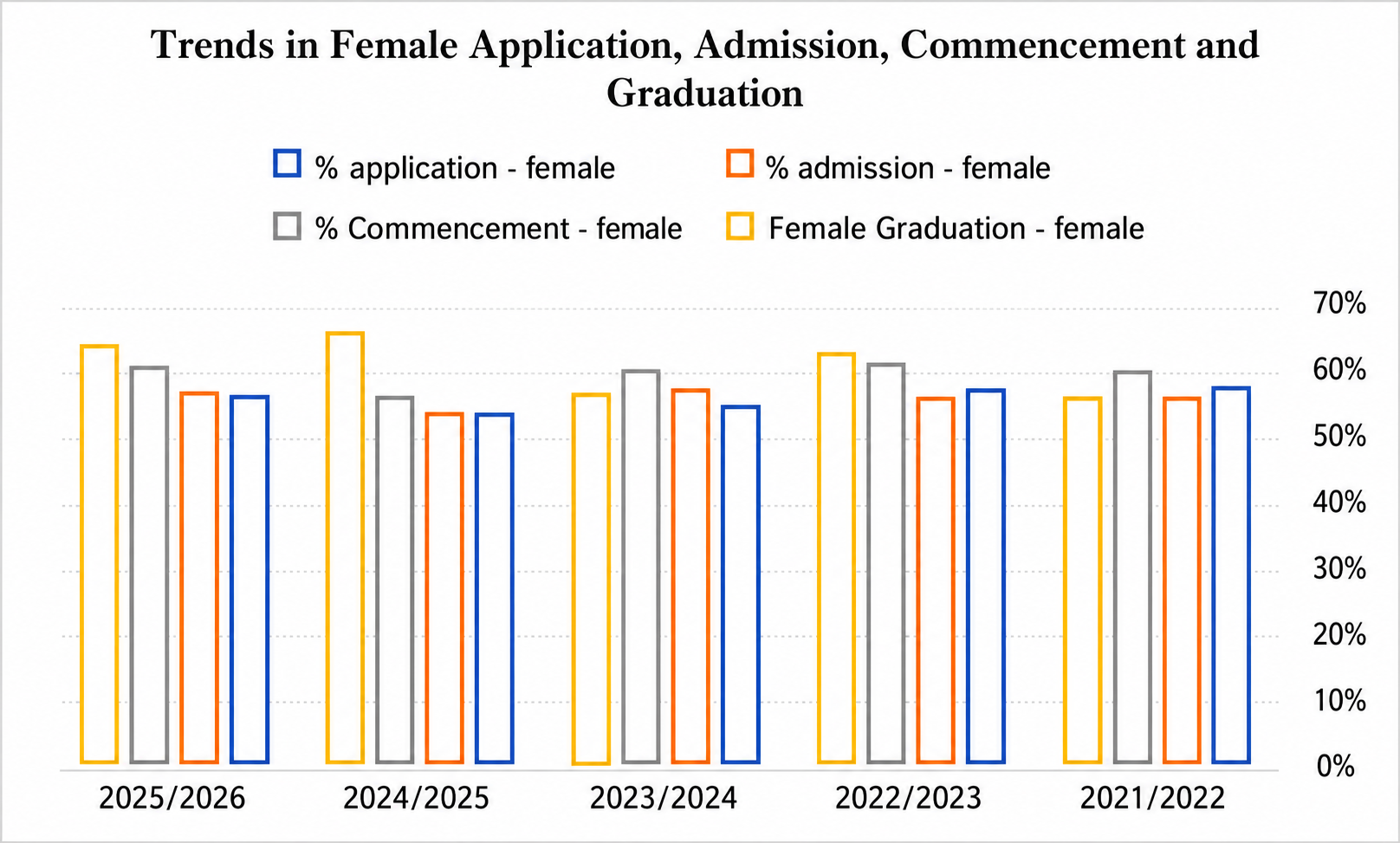
Over the past five academic years, female representation has remained consistently strong across all stages of the pipeline. Application rates ranged between 51% and 55%, with admission rates tracking closely behind each stage, indicating no gender-based disparity in the conversion from applicant to admitted student. Commencement rates have generally exceeded admission rates, suggesting that admitted female students are, if anything, slightly more likely to enroll and begin their studies. Graduation rates have shown a clear upward trend, rising from 54% in 2021–22 to a peak of 64% in 2024–25, reflecting improving completion outcomes over time.
Taken together, the data show no evidence of disadvantage for female students at any stage — application, admission, commencement, or graduation — and instead point to strong representation and improving completion outcomes, reflecting the effectiveness of the University's ongoing commitment to gender equity.
| AY | % Application - Female | % Admission - Female | % Commencement - Female | % Graduation - Female |
|---|---|---|---|---|
| 2021-22 | 55% | 54% | 58% | 54% |
| 2022-23 | 55% | 54% | 57% | 60% |
| 2023-24 | 53% | 55% | 57% | 54% |
| 2024-25 | 51% | 51% | 53% | 64% |
| 2025-26 | 54% | 54% | 57% | 61% |
The University places special focus on encouraging greater female participation in STEM fields, particularly engineering, where women remain under-represented. Through targeted initiatives such as mentorship programs, scholarships, skills development activities, and engagement opportunities, the University works to lower barriers to entry and build stronger pathways into STEM education and careers. These efforts are reflected in the data: female participation in engineering rose steadily from 26% in 2021/22 to a peak of 33% in 2024/25, before declining slightly to 30% in 2025/26. This recent dip underscores the need for continued and strengthened efforts to sustain the progress achieved in prior years.
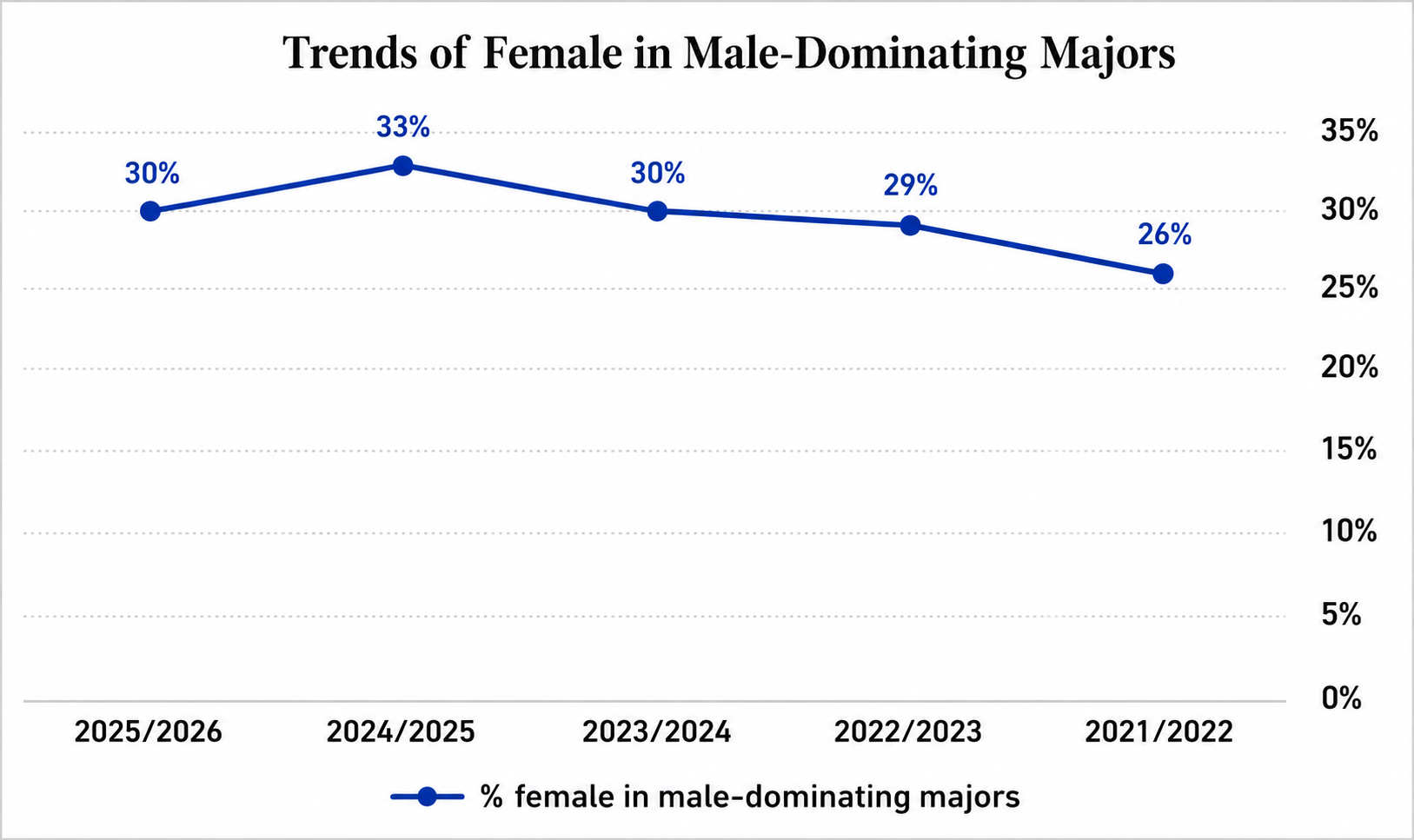
Looking ahead, the University remains committed to deepening its initiatives to close gender gaps in fields where women are still underrepresented. By sustaining and expanding programs that promote equity and provide targeted support, PU seeks to broaden opportunities for female students to engage, excel, and advance across every discipline — furthering its vision of a diverse, inclusive, and equitable academic community.
People Living with Disabilities
The University is committed to building a campus that is accessible, inclusive, and equitable for students and employees with disabilities, working to eliminate physical, academic, and workplace barriers while providing reasonable accommodations — such as individualized support plans, adjusted assessment arrangements, accessible learning materials, and assistive technologies — that enable full participation in learning, work, and campus life. To assess the effectiveness of these policies and services, the University tracks the representation of these groups, using this data to continually refine its efforts toward equal opportunity for all.
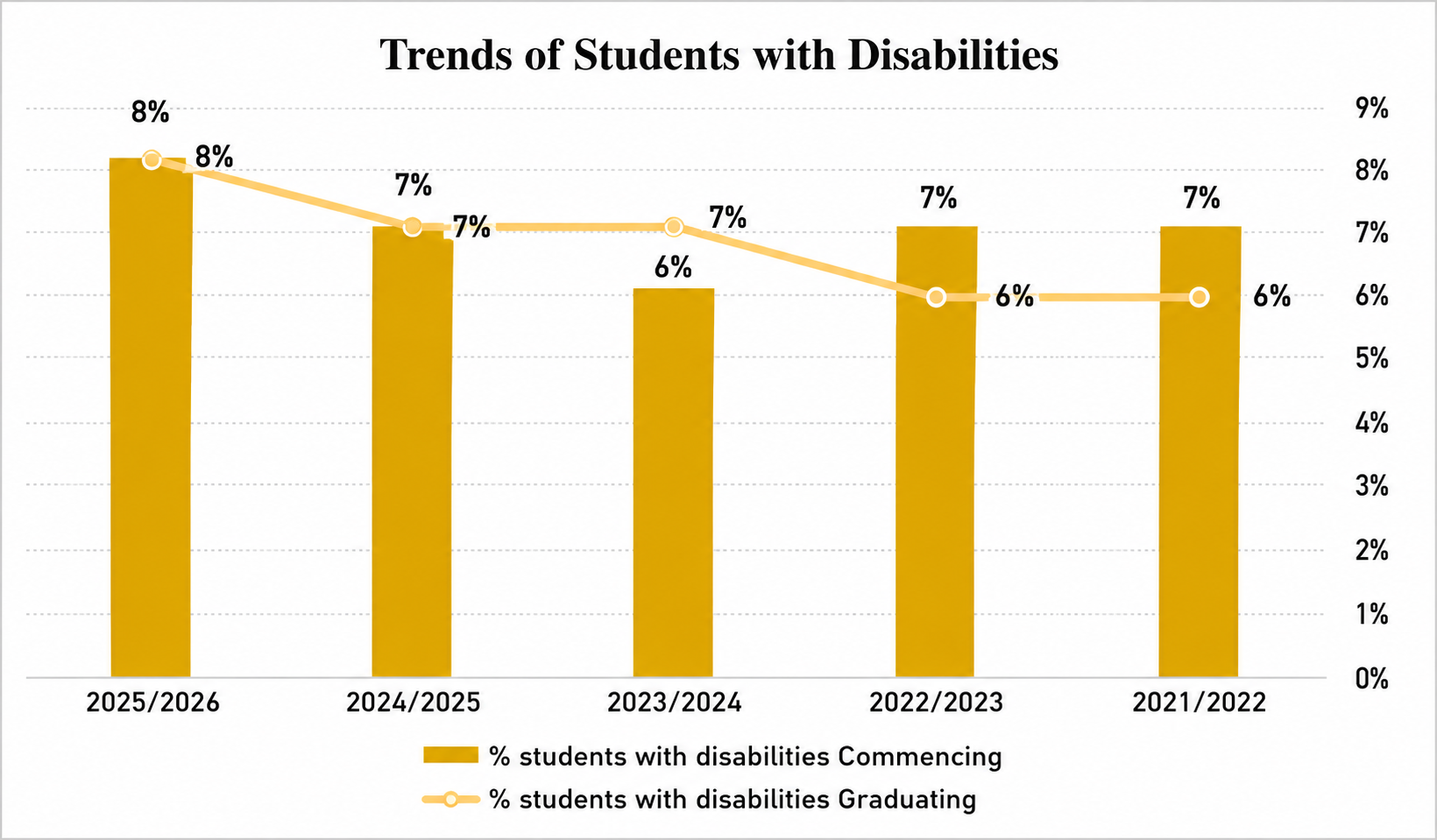
This commitment is reflected in the University's five-year trend data, which shows a steady increase in the representation of students with disabilities at both commencement and graduation. The percentage of incoming students with disabilities rose from 7% in 2021/2022 to 8% in 2025/2026, while the graduation rate for this group increased from 6% to 8% over the same period. Notably, the convergence of commencing and graduating percentages in 2025/2026 suggests improving retention and completion rates, underscoring the tangible impact of the University's accessibility and support framework.
The University also monitors the representation of employees with disabilities as part of its commitment to an inclusive and equitable workplace. Over the past five years, employees with disabilities have consistently represented an average of 18% of the University's workforce, reflecting the institution's ongoing efforts to promote equal employment opportunities and an accessible working environment.
Policy on Reasonable Accommodation for Differently Abled Individuals | Phoenicia University
Low Socio-Economic Status
At PU, financial aid is awarded specifically to students from low-income households or from Low- and Lower-Middle-Income Countries (LLMICs), making financial aid recipiency a direct indicator of low socio-economic status within the student body. The University tracks the representation of these students across the student journey, with a particular focus on commencement and graduation, to ensure they are supported in successfully completing their studies.
Over the past five academic years, the proportion of low-income students receiving financial aid at commencement has risen steadily, from 47% in 2021–22 to 69% in 2025–26, reflecting the growing effectiveness of the University's outreach, admissions, and access initiatives. This upward trend demonstrates strong progress in improving access and affordability for low-income students at the point of entry.
The University will continue to evaluate the effectiveness of its support services — including financial aid, academic advising, and mentoring — in ensuring that these gains in access translate into equally strong outcomes as students progress through their studies.
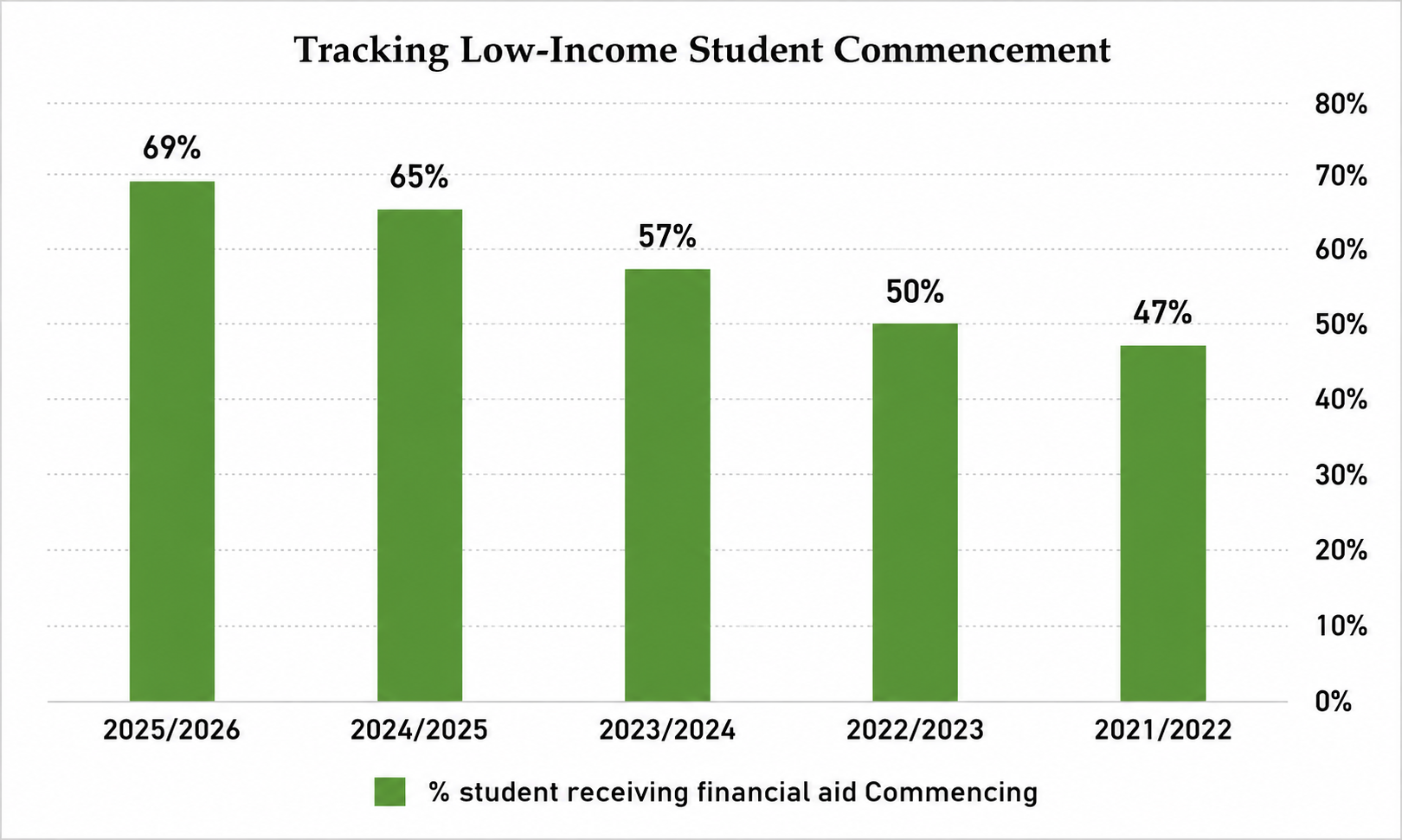
Financial Aid and Scholarship Policy | Phoenicia University
Ethnic, Cultural and Linguistic Diversity
Promoting ethnic, cultural, and linguistic diversity stands as a key priority in cultivating an inclusive, globally engaged learning environment. The University monitors the composition of its student population — including international students, non-Arabic speakers and those from ethnic minority groups — to gauge the effectiveness of its inclusive recruitment practices and student support services. This ongoing tracking allows the University to continually assess its efforts to ensure equitable access, meaningful participation, and academic success for students from diverse backgrounds.
International Students
Over the past five academic years (2021/22–2025/26), international students have consistently represented 8–11% of PU's commencing and graduating populations, with no clear upward or downward trend — indicating a stable, sustained presence of international students within the University community year over year.
Non-Arabic Speaking Background
Among international students, the proportion from non-Arabic-speaking backgrounds fluctuated year to year, ranging from 67% to 84% at commencement and 67% to 90% at graduation, but has remained consistently above two-thirds in every year recorded. This indicates that the majority of PU's international student population brings linguistic and cultural diversity beyond the Arabic-speaking region, reflecting the University's ongoing commitment to fostering a globally engaged and culturally diverse learning environment.
| AY | International Students | Non-Arabic Speaking (out of international students) | ||
|---|---|---|---|---|
| % Commencing | % Graduating | % Commencing | % Graduating | |
| 2021-22 | 10% | 8% | 68% | 67% |
| 2022-23 | 8% | 10% | 80% | 90% |
| 2023-24 | 10% | 9% | 77% | 85% |
| 2024-25 | 11% | 12% | 67% | 80% |
| 2025-26 | 10% | 8% | 84% | 67% |
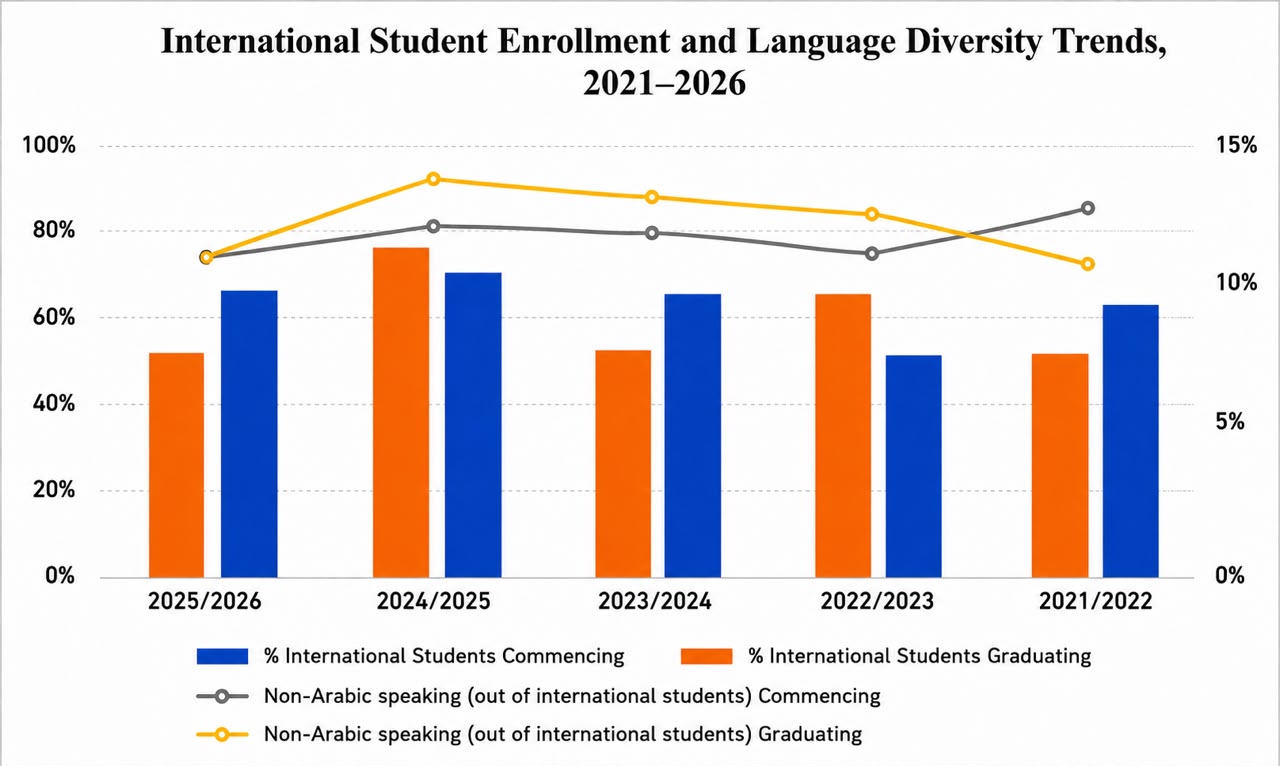
Ethnic Minority Students
Over the past five academic years (2021/22–2025/26), the representation of ethnic minority students has remained relatively stable, ranging between 3% and 4% at both commencement and graduation. This consistency indicates a stable, ongoing presence of ethnic minority students within the University community, reflecting the sustained effectiveness of the University's inclusive recruitment practices and support services in maintaining equitable access and participation for students from diverse ethnic backgrounds.
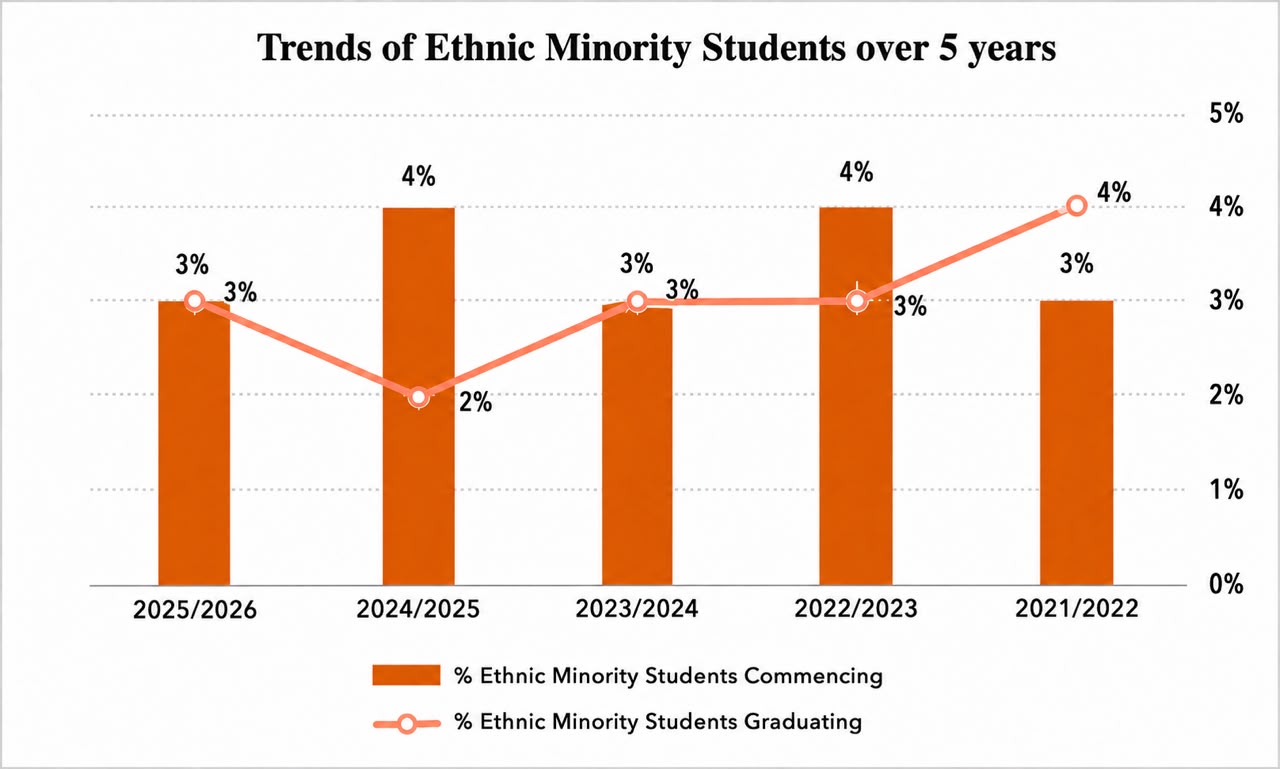
Note: The total number of graduates taken into consideration is based on the total number of graduates by subject area.
Additional Sources
10.6.3 Access to university underrepresented groups recruit
PU promotes the social, economic and political inclusion of all, irrespective of age, sex, disability, race, ethnicity, origin, religion or economic circumstance or any other status — governed under Goal 4 of the University's Goals and Strategies | Phoenicia University framework.
Ensuring equal access to educational and employment opportunities is central to advancing social inclusion and narrowing inequalities. In pursuit of this goal, PU carries out targeted recruitment, outreach, and support initiatives designed to boost participation among underrepresented groups across both its student body and workforce. These efforts work to dismantle barriers to access, foster diverse participation, and open equitable pathways for those who have historically faced social, economic, geographic, or other forms of disadvantage. Through its institutional policies and support structures, PU continues to nurture an inclusive academic and professional environment—one that values diversity, champions equal opportunity, and empowers every member of its community to thrive.
As an equal opportunity institution, PU applies fair and transparent practices in both admissions and employment, ensuring that individuals are evaluated on the basis of their qualifications, competencies, and merit. The University's Admissions Office Policy | Phoenicia University supports equitable access to higher education, while its Equal Employment Opportunities Policy | Phoenicia University affirms its commitment to equal employment opportunities for qualified candidates. No person is denied admission or employment on the basis of any legally protected status, including race, ethnic or national origin, citizenship, color, sex, pregnancy, age, religion, disability, or any other characteristic protected by applicable law.
The University translates this commitment into a set of active measures to recruit staff and faculty from underrepresented groups, including:
Diversity, Equity and Inclusion Committee (DEIC): PU's DEIC is responsible for reviewing hiring practices across the University to ensure equitable access to staff and faculty positions. In collaboration with the Women's Continuity Pathway initiative, the Committee supports the reintegration of skilled female staff and faculty whose careers have been interrupted due to childbirth, childcare, or other caregiving responsibilities, facilitating flexible re-entry arrangements, mentorship, and tailored support to help women resume their academic or professional roles smoothly and without long-term career disadvantage.
PU initiative: HR Staff Training on Inclusive Campus Communication | Phoenicia University
Partnership with Lebanese Welfare Association for the Handicapped (LWAH): PU maintains a formal partnership agreement with LWAH. Through this partnership, LWAH refers job-ready candidates directly to PU for consideration in available staff positions. This direct referral pathway enables the University to actively recruit qualified candidates with disabilities who might otherwise face barriers to accessing conventional hiring channels, reinforcing PU's broader commitment to an inclusive and diverse workforce.
International Faculty Recruitment: PU actively recruits faculty from diverse international and regional backgrounds, drawing on their varied academic experience, cultural perspectives, and specialized expertise to enrich the University's teaching, research, and institutional knowledge base. On average, international faculty have comprised 29% of PU's academic staff, reflecting the University's sustained commitment to inclusion across national origin and ethnicity while strengthening the academic quality and global outlook of its programs.
As mentioned in Staff and Faculty Nondiscrimination Discriminatory Harassment and Retaliation Policy | Phoenicia University, PU is an equal opportunity employer committed to fostering a diverse, inclusive, and equitable academic and working environment. All qualified applicants will be considered for employment without regard to age, sex, disability, race, ethnicity, national origin, religion, or any other status protected under applicable law. We welcome and encourage applications from individuals of all backgrounds. PU ensures that accommodations, including accessible interview formats and locations, are available to any candidate who requests them throughout the application or interview process.
Various Planned Actions for Under-represented Students
Through scholarships, financial assistance programs, and targeted outreach initiatives, PU works to reduce barriers and expand access to academic opportunities for underrepresented students:
1- Partnership with LWAH
Building on its partnership described above, PU connects students supported by LWAH to the University as a pathway to continue their higher education. This ensures that prospective students with disabilities served by LWAH are aware of, and able to access, academic programs and support services at PU, extending the University's recruitment reach into a community that might not otherwise pursue higher education.
2- School Outreach and Recruitment Visits
PU conducts systematic annual school outreach and recruitment visits as part of its broader efforts to attract prospective students from underrepresented groups, reaching approximately 175 schools and an estimated 8,750–10,500 prospective students each year. Among these, approximately 5 schools serve refugee student populations exclusively, reaching an estimated 300-325 students. These visits include presentations on academic programs and admission pathways, with targeted content addressing the specific barriers faced by different underrepresented groups — for example, highlighting financial aid opportunities for students from low-income backgrounds and promote STEM education and career pathways to encourage greater participation of female students in traditionally underrepresented fields (detailed below).
School Visits and Outreach | Phoenicia University
As a member of the Council of International Schools (CIS), PU also expands its outreach through a global network of member schools, providing opportunities to engage with institutions collectively enrolling more than 818,500 students each year.
- Integrated Recruitment and Outreach Approach
- Enhanced financial aid for female STEM applicants, as outlined in the University's Financial Aid and Scholarship Policy | Phoenicia University , helping to reduce financial barriers and encourage enrollment.
- Dedicated STEM awareness sessions during school visits, education fairs, Open Days, and summer camps, showcasing academic programs and career opportunities for women.
- Inclusive marketing and communications, ensuring female representation across recruitment materials, the University website, and promotional campaigns.
Financial Aid Publicity
To ensure that financial barriers do not deter prospective students from applying, PU publicizes its financial aid and scholarship programs to prospective applicants through school visits, open days, information sessions, and social media campaigns. By making funding opportunities visible before the application stage, PU aims to attract talented students from low-income households and LLMICs who might not otherwise view higher education as financially attainable.
Through initiatives such as the Science Fair, PU provides talented students with opportunities to access higher education through scholarship awards supporting students who may face financial barriers.
Financial Aid and Scholarship Policy | Phoenicia University
3- Facilities, initiatives and policies for people with disabilities
PU's accessibility services and accommodations are communicated to potential students and applicants with disabilities during campus visits, admissions counselling, and outreach to schools or organizations supporting students with disabilities — ensuring that individuals are aware, prior to applying, that PU can meet their academic and physical accessibility needs. This transparency removes a key barrier that might otherwise discourage prospective disabled students from applying. This is formalized through PU's accessibility handout, which outlines the University's accessibility infrastructure, support services, and academic accommodation procedures.
As outlined in the Reasonable Accommodation for Differently Abled Individuals Policy | Phoenicia University, PU implements a range of accessibility measures to support people with disabilities across academic, physical, emotional, and professional aspects of university life. All those measures are detailed in Disability Access Scheme.
Through these combined efforts, PU reinforces its commitment to an inclusive environment in which individuals with disabilities — whether students, faculty, or staff — have equal opportunity to participate, learn, work, and thrive.
4- PU's Global Outreach and International Affairs (GOIA) Office serves as the institutional mechanism through which PU widens access to higher education for students from beyond its immediate local community. As part of PU's broader internationalization strategy, the GOIA Office builds and sustains formal partnerships with higher education institutions abroad, creating structured pathways for international and mobility students — including those from underrepresented regions and backgrounds — to access a PU education.
Concretely, the office:
- Manages international agreements and partnerships with universities worldwide, expanding the pipeline of prospective students who might not otherwise have access to PU's programs.
- Coordinates scholarship support and visa assistance for incoming international students, directly lowering financial and administrative barriers that disproportionately affect underrepresented and mobility students.
- Facilitates student mobility and transnational education — exchange programs, summer sessions, and postgraduate opportunities abroad — giving PU students, regardless of background, access to global academic experiences.
GOIA office initiative: International Outreach School Visits | Phoenicia University
10.6.4 Antidiscrimination Policy
Phoenicia University's Discrimination and Harassment Policy formally prohibits discrimination and harassment on the basis of race, color, religion, national origin, age, disability, marital status, sex, veteran status, and other legally protected characteristics, applying to all staff, faculty, students, visitors, and academic appointees. The policy includes a dedicated provision on accommodation for disabilities, a formal grievance and investigation procedure, and a zero-tolerance stance with disciplinary consequences up to termination for substantiated violations.
10.6.5 University Diversity Officer
Phoenicia University’s(PU's) diversity, equity, inclusion, and human rights efforts are guided by the Diversity, Equity, and Inclusion Committee (DEIC) , which provides strategic oversight and establishes the institutional direction for advancing an inclusive university environment. The Committee is responsible for developing university-wide policies, reviewing major diversity, equity, and inclusion initiatives, and overseeing strategic priorities related to accessibility, equal opportunity, and human rights.
Supporting the work of the DEIC, the University Diversity Office (UDO) serves as the operational arm responsible for implementing the Committee’s decisions and translating institutional priorities into programs, services, and support mechanisms. Reporting to the DEIC and the Chancellor, the UDO coordinates diversity, equity, inclusion, and human rights initiatives across academic, administrative, and campus environments.
The UDO’s responsibilities include:
- Advising university leadership and the DEIC on policies and practices that advance diversity, equity, inclusion, accessibility, and human rights;
- Coordinating the implementation of DEIC programs and support services for students, faculty, and staff;
- Developing and delivering training and awareness initiatives related to inclusion, human rights, accessibility, and equitable practices;
- Monitoring concerns related to discrimination, exclusion, or unfair treatment through the university’s formal complaints procedures and ensuring that appropriate resolution pathways are followed, with escalation to the DEIC when required;
- Managing cases involving gender-based or sexual harassment through confidential, impartial, timely, and trauma-informed procedures;
- Overseeing the Minorities Center and ensuring alignment between its activities and PU’s broader diversity and inclusion priorities;
- Engaging student organizations, university departments, and community representatives to identify needs and strengthen inclusive practices;
- Convening representatives from Student Affairs , employees, and student bodies as needed to inform and support the Committee's initiatives.
Accessing Support and Referral Pathways
The University Diversity Office (UDO) serves as an accessible point of contact for members of the PU community seeking guidance, support, or assistance related to diversity, equity, inclusion, accessibility, or human rights matters. Individuals can reach out directly to the UDO to discuss their circumstances and receive guidance on the appropriate support pathway.
Based on individual needs, the UDO connects students, faculty, and staff with the Minorities Center, where trained staff provide specialized support and coordinate referrals to relevant university services and resources. The UDO’s approach ensures that concerns are addressed through appropriate, confidential, and supportive processes.
Student Nondiscrimination, Discriminatory Harassment and Retaliation Policy | Phoenicia University
Minorities Center: Promoting Inclusion, Belonging and Equal Opportunity
Under the supervision of the UDO, the Minorities Center fosters an inclusive and equitable university environment that promotes belonging and equal opportunity for all members of the university community.
The Center works to identify and address barriers that may limit individuals’ access, participation, and full engagement in university life. Through coordinated support and collaboration with relevant university departments, the Center promotes inclusion, equity, and access to essential resources and services.
The Center also monitors emerging needs among underserved groups and works with university units to ensure timely, equitable, and responsive solutions. Through these efforts, it contributes to building a more inclusive campus where all individuals have the opportunity to participate and succeed.
Women's Continuity Pathway
The Minorities Center coordinates support for women whose education or employment is at risk of interruption — or has already been paused — for any reason, including childcare needs, marriage, caregiving responsibilities, or financial hardship. Rather than navigating these challenges alone across multiple departments, women can turn to the Center as a single point of coordination to plan a path to resume their studies or work.
Where childcare is the barrier, individuals are connected to PU's subsidized childcare partnership with the Lebanese Welfare Association for the Handicapped (LWAH); where the barrier is financial, academic, or logistical, Center staff coordinate directly with the relevant university departments — academic, HR, and financial aid — to support re-enrollment or return to work.
Center staff bring specialized training that equips them to guide women through pauses in their education or career, ensuring consistent, informed support at every step. This grounding in professional training is what has qualified them for their roles and appointments in the field:
- Humanitarian Leadership Diploma – 2022
- UNICEF: Infant Young Child Feeding in Emergencies – 2023
- PLAN International: Gender Based Violence – Reproductive and Sexual Health – 2019
- Lana Haq (We Have a Right) Initiative, Jordan — A member of Center staff served as Change Maker Officer at CFUWI, in partnership with Oxfam (2015), where she initiated the Lana Haq ("We Have a Right") Initiative: cross-country study visits on gender equality, women's empowerment, and social inclusion, engaging civil society organizations and community leaders on women's participation in education, employment, and leadership.
Disability Support Pathway
Living with a disability should not stand in the way of completing a degree or doing your job well. The Minorities Center works with students and employees to identify what is needed — whether it is a physical accommodation, an assistive device, or a therapy referral — and helps put it in place.
Through PU's partnership with the Lebanese Welfare Association for the Handicapped (LWAH), the Center connects individuals to the Patient Access Office and Social Services to provide them with suitable support. When the need is academic or workplace-related instead — extended deadlines, accessible classroom arrangements, adjusted work conditions — trained Center staff liaise directly with the relevant academic, HR, or facilities teams to get it sorted.
Staff supporting this pathway bring hands-on expertise to this work, developed through specialized training such as Educational Technology (ET) and Assistive Technology (AT): Supporting People with Special Needs – 2018, as well as ongoing service as an Assistive Technology Provider supporting individuals with disabilities and special educational needs — assessing AT needs, implementing solutions, and training multidisciplinary rehabilitation teams.
Other Support Pathways
Beyond the pathways above, the Minorities Center serves as a point of contact for other underrepresented groups, including students and employees facing financial hardship and international or ethnic minority students navigating integration challenges. In these cases, Center staff connect individuals to the relevant university office — financial aid, Student Affairs, or GOI Office — to ensure their concerns are addressed through the appropriate channel.
Students and employees from low-income households and the bottom income quintile are recognized as facing compounded financial, academic, and social barriers to completing their studies or sustaining employment. The Center works to identify the specific support required in each case, which may include emergency financial assistance, adjusted or deferred tuition payment arrangements, connection to work-study or income-support opportunities, or referral to external welfare and NGO partners. Center staff coordinate directly with the Financial Aid Office to conduct a thorough assessment of individual needs and to secure timely, tailored support, ensuring that financial hardship does not become a barrier to academic or professional success.
▸ Collaborative Initiatives Supporting Inclusion
In collaboration with Student Affairs, the UDO and Minorities Center reinforce broader campus initiatives that support PU's commitment to inclusion, including Student Clubs & Societies , which strengthen inclusion and promote participation among diverse groups within the PU community.
- Community Service Club: Promotes human rights, community engagement, and humanitarian action through service-oriented activities.
Clothes Donation Drive | Phoenicia University - We Create: Provides a creative platform that encourages self-expression, inclusion, and collaboration among students from diverse backgrounds.
Echoes of Hanan | Phoenicia University
Creative Wellness Workshop | Phoenicia University - Public Health Society: Conducts health awareness campaigns and initiatives that address the needs of underserved and vulnerable communities.
Health Awareness Session | Phoenicia University
Diabetes Awareness Campaign | Phoenicia University - Speech Therapy Society: Raises awareness and advocates for individuals with communication challenges and accessibility needs.
Voice and Body Wellness Workshop | Phoenicia University
Sukoon | Phoenicia University - Women Empowerment Club: Promotes gender equality, women’s leadership, and increased participation of women within the university community.
Seminar on Combating Sexual Harassment | Phoenicia University
Breaking Barriers and Empowering Women | Phoenicia University - Al Risala Club: Engages in community service activities and initiatives that promote social responsibility, inclusion, and community values.
Interview with Dr. Mohamed Abo Haidar | Phoenicia University
Other UDO Initiatives
Cross-cultural inclusion: The annual International Day (April 21, 2024) brought together 11 student societies and 9 student clubs to celebrate global cultures through cuisine, performances, and cultural activities, with equal female leadership across executive planning roles.
Building on these collaborations, the UDO is developing a structured diversity, equity, inclusion, and human rights training program for faculty, staff, and student leaders. The program aims to strengthen awareness, build capacity, and support the integration of inclusive practices across the university.
10.6.6 Support for underrepresented groups: Provide mentoring, counselling, or peer support programmes to support students, staff, and faculty from underrepresented groups.
PU implements a range of services and support programs that address the diverse needs of its students and employees, with particular attention to advancing inclusion and supporting members of underrepresented groups.
1- Student Mentorship Program
PU's Student Affairs Office, in collaboration with the University Diversity Officer (UDO) and the Minorities Center, operates a university-wide Student Mentorship Program that pairs first-year students with trained peer or alumnae mentors to support their academic transition, engagement, personal development, and successful integration into university life. The programme provides guidance on academic expectations, campus resources, study skills, and student life, while fostering a supportive learning community.
Building on this institutional programme, PU also operates a peer mentoring scheme for students from underrepresented backgrounds — including students with disabilities, females, and students from underserved regions or economically disadvantaged backgrounds — who may face additional barriers to academic transition and integration. The scheme pairs incoming first-year students from these groups with senior peer mentors who share similar backgrounds or lived experience at a 1:4 mentor-to-mentee ratio, providing peer support, practical guidance, and experience-based advice to support retention, engagement, and successful progression through their studies. Mentors serve as relatable role models who have successfully navigated similar challenges, helping mentees build confidence, access campus resources, and develop a sense of belonging within the university community.
Targeted Mentoring Tracks
Building on the broader Student Mentorship Program, PU offers targeted mentoring opportunities designed to address the specific needs and experiences of different underrepresented groups.
- Female-to-Female Mentoring Track: Within STEM disciplines, incoming female students are paired with senior female students who provide peer support, practical advice, and experience-based guidance. This female-to-female mentoring track is designed to strengthen women's sense of belonging, engagement, retention, and successful progression throughout their studies.
- Financial and Transition Support Track: A dedicated mentoring track supports first-year students from the bottom income quintile and LLMICs, pairing them, where possible, with senior students who have navigated similar financial or transitional challenges. Mentors provide ongoing peer support during the first year and are trained to recognize signs of financial difficulty, encourage early disclosure, and help students connect with appropriate university resources such as Work-Study, the Counseling Center, and other wraparound services.
- Disability Inclusion Mentoring Track: A dedicated mentoring track supports incoming students with disabilities and diverse accessibility needs, connecting them with trained senior peer mentors who can provide practical guidance, peer support, and assistance in navigating university life. Mentors help students become familiar with campus resources, accessibility services, academic support, and other available accommodations, while fostering a sense of belonging and inclusion. The track also provides an avenue for students to raise concerns early and connect with the appropriate university services to support their participation, engagement, and successful progression.
2- Career Support
The PU's Career Center (PUCC) helps students transition into the workforce through career counseling, CV and interview preparation, and job and internship placement with local, regional, and international employers. Within this support, PUCC prioritizes closing access gaps for students from underrepresented backgrounds.
Workforce Program — In partnership with the LWAH, PU launched the Workforce Program in December 2016 — the University's first initiative to fulfill the right to employment for persons with disabilities. The program bridges the gap between qualified candidates with disabilities and employment opportunities in both the public and private sectors and has helped numerous individuals with disabilities secure meaningful employment since its launch.
PU Alumni Mentorship Track — A dedicated mentoring track within PUCC pairing students from underrepresented backgrounds with PU alumni who share similar backgrounds and have successfully transitioned into the workforce. This includes connecting female students in STEM fields with alumnae already established in those industries, offering guidance grounded in lived experience and access to a professional network they may not otherwise have.
Salary negotiation coaching — PUCC offers targeted workshops helping female students build negotiation skills and confidence ahead of entering the job market.
Women's Return-to-Work Support — In coordination with the Minorities Center's Women's Continuity Pathway and HR, PUCC supports PU staff and faculty returning to their roles after a career interruption, offering skills refresh guidance, confidence coaching, and connection to relevant training resources to ensure a smooth and supported return to work.
PU Support Initiatives:
Get Hired | Phoenicia University
Career Fair | Phoenicia University
3- Support for People with Disabilities
As outlined in the Policy on Reasonable Accommodation for Differently Abled Individuals | Phoenicia University, PU implements accessibility measures supporting people with disabilities across academic, physical, emotional, and professional aspects of university life, detailed further in the Disability Access Scheme. Beyond these internal measures, PU extends its commitment to disability inclusion through community partnerships — notably with LWAH, which consults PU's faculty on the design and implementation of disability-related advocacy events, ensuring interventions are grounded in academic expertise and best practice.
4- Academic Mobility Support / Financial Aid:
Annual Student Empowerment & Scholarship Access Program:
As part of its commitment to expanding access to academic opportunities, the Global Outreach and International Affairs (GOIA) Office at PU provides students with information, guidance, and access to international study and scholarship opportunities. Through recurring information sessions, advising activities, and connections with international higher education networks, the University helps reduce informational and financial barriers that may prevent students from pursuing graduate studies abroad.
For example, PU hosted an informative session on graduate studies in France, providing students with information on available academic pathways, university opportunities, admission requirements, and potential funding mechanisms. Such sessions enable students, including those who may have limited access to international academic networks, to make informed decisions about pursuing postgraduate education abroad.
Beyond running such sessions, GOIA also encourages students to attend other scholarship advising sessions: since 2023, it has run an annual scholarship advising framework connecting students with fully funded international scholarship opportunities, made up of three recurring session series:
- EducationUSA Information Sessions: As part of this yearly framework, PU regularly invites students to attend EducationUSA Information Sessions — free advisory events organized by the U.S. Department of State network, operating across more than 175 countries worldwide.
These sessions provide students with comprehensive guidance on pathways to U.S. higher education, including how to research universities, understand funding and scholarship opportunities, and navigate the application process. By continuously facilitating student access to these sessions year after year, PU ensures that motivated students — regardless of their financial background — are equipped with the knowledge and resources needed to pursue advanced academic opportunities abroad.
U.S. Higher Education Pathways, Funding & Scholarship Access
- Fulbright Scholarship Information Sessions: As the second session series within this annual framework, PU organizes dedicated Fulbright Scholarship Information Sessions, connecting students with one of the most prestigious and fully funded scholarship programs in the world, sponsored by the U.S. Department of State. The Fulbright Program offers full funding covering tuition, living expenses, travel, and health insurance — making it one of the most powerful tools available to remove financial barriers for academically talented but economically disadvantaged students.
U.S. Government Fully Funded Scholarship Access & Advising
FULBRIGHT FOREIGN STUDENT PROGRAM FOR LEBANON | Amideast
- Chevening Scholarship Information Sessions: As the third session series within this continuous framework, PU organizes annual Chevening Scholarship Information Sessions, providing students with direct access to advising on the UK government's flagship international scholarship program, funded by the Foreign, Commonwealth & Development Office (FCDO). Chevening Scholarships offer full funding for a one-year master's degree at any UK university, covering tuition fees, living expenses, travel costs, and additional grants — making it one of the most comprehensive fully funded opportunities available to international students.
UK Government Fully Funded Scholarship Access & Advising
Applications for Chevening Scholarships Programme are Open - GOV.UK
5- Female Leadership and Role Models Sessions
PU regularly hosts leadership and mentoring sessions that connect students — particularly female students in fields where they are underrepresented — with accomplished female role models. Recent sessions have included an interactive interview with Mrs. Maliha Moussa El Sadr, civic leader, advocate, and director of the Early Childhood Intervention Lebanon (ECIL), subsidiary of the Imam Sadr Foundation, focused on professional resilience and leadership; and a technical seminar featuring Dr. Nadine Abbas, of the Lebanese American University, offering engineering and computer science students direct exposure to a leading female academic in STEM.
6- Counseling Support
To ensure that underrepresented students receive support tailored to their specific circumstances, the Counseling Center works in coordination with PU’s Minorities Center. Where the Minorities Center identifies a need for psychological or wellbeing support, students may be referred to targeted counseling tracks designed to address the particular barriers affecting their wellbeing, academic continuity, or participation in university life.
These referral-based tracks include:
Women’s Continuity Support Track
- confidential counseling around stress and competing responsibilities;
- a return-to-study plan after an interruption;
- coordination with academic advisors where a reduced or adjusted course load is needed;
- referral to financial or other institutional support;
- follow-up during the first semester after returning.
Accessible Wellbeing Support Track
- remote counseling where mobility or transportation is a barrier;
- coordination, with the student's consent, with the Registrar, Students Affairs or relevant academic unit.
- support during transitions such as entering university, placement, internships, or graduation;
- referral to specialized services when required.
Student Resilience & Support Pathway
- confidential assessment of how financial or personal hardship is affecting attendance or performance;
- referral to financial assistance or the Minorities Center;
- coordination with academic advising if the student is at risk of withdrawing;
- short-term coping and stress-management support;
- follow-up to help prevent dropout.
7- Learning Development Center
The PU Learning Development Center (PULDC) aims to cultivate an academically enriching and inclusive environment where every student feels valued, supported, and empowered. Through accessible learning opportunities, peer tutoring, study groups, foundational course support, and academic guidance, the Center fosters a culture of continuous learning, innovation, and personal growth. In addition, PULDC enhances students' writing proficiency, communication skills, and study practices, ensuring that learners have the tools and resources needed to succeed academically, professionally, and socially in an evolving global landscape. Within this broader mission, PULDC provides targeted mentoring and academic support for students from underrepresented groups, helping close gaps in retention and academic success.
- Peer Support Unit: It provides students with guidance, encouragement, and shared learning through trained peer mentors. It fosters a supportive environment where students can receive support with revision sessions, tutoring, and a range of personal challenges, all with understanding and confidentiality.
- Public Speaking Unit: Personalized coaching to build communication confidence, particularly valuable for students with limited prior exposure to public speaking or academic presentation norms, including first-generation students, those from underrepresented backgrounds, and students facing social anxiety or speech-related challenges.
- Writing Center: One-on-one support for writing skills, structure, and academic integrity, particularly valuable for students facing language barriers, gaps in prior academic preparation, or limited exposure to academic writing conventions.
- Workshops and Trainings: Skill-building sessions covering academic, personal, and professional competencies, supporting equitable access to skills for students who may not have had the same opportunities to develop them elsewhere — including first-generation students, students from underrepresented backgrounds, and those balancing work or caregiving responsibilities alongside their studies.
PU Support Initiatives:
Computer Science Peer Support Program Launched at PU
10.6.7 Accessible Facilities
As outlined in PU's Policy on Reasonable Accommodation for Differently Abled Individuals | Phoenicia University , the University provides accessible facilities and support across campus, academic, and employment settings to ensure full participation for people with disabilities.
Campus and Physical Accessibility
PU has invested in physical infrastructure to ensure ease of mobility and access across campus, including ramps, elevators, accessible restrooms and parking, tactile signage, and adapted classroom and laboratory furniture. The University accommodates vehicle access for individuals who require it and provides pathways for electric wheelchairs into lecture halls.
Beyond general infrastructure, several PU buildings have been specifically designed or retrofitted with accessibility as a core consideration, incorporating features such as widened accessible corridors, specialized restrooms, clearly marked emergency evacuation routes and procedures, and priority housing arrangements for students who require it.
Related Resources:
PU Floor Plans
A Differently-Abled Friendly Campus
Academic Accessibility
Dedicated academic support is provided to students with learning disabilities according to each student's documented medical condition, including accommodations such as additional examination time. Assistive technology is also built into campus computing facilities — a dedicated computer station in Room A109 is equipped with built-in tools designed to help visually impaired users interact with technology independently.
Accessible Library Resources
The University library provides adaptive technologies and materials, including screen readers, braille texts, audiobooks, and specialized workstations, ensuring that students with visual, auditory, or physical disabilities can access information independently.
Employment Accessibility
PU is equally committed to accessibility within its workforce, offering accessible workplaces and equipment for faculty and staff, along with flexible or modified work schedules and assistive technology tailored to individual needs. The University's recruitment and interview processes are designed to be inclusive, and performance evaluations are conducted fairly, with appropriate adjustments made to account for disability-related considerations.
10.6.8 Disability support services: Support services for people with disabilities.
As outlined in PU's Policy on Reasonable Accommodation for Differently Abled Individuals | Phoenicia University, PU provides a coordinated set of support services for people with disabilities across peer support, faculty/staff coordination, health and wellbeing, and academic accommodation.
Peer Support Unit
This program provides students with guidance, encouragement, and shared learning through trained peer mentors. It fosters a supportive environment where students can receive support with revision sessions, tutoring, and a range of personal challenges, all with understanding and confidentiality.
Faculty and Staff Coordination
This component ensures that instructors, administrators, and support staff are trained and equipped to implement accommodations consistently. A Disability Service Coordinator within Minorities Center liaises between students and faculty to ensure accessibility plans are followed and adjusted as needed throughout the academic year to create an inclusive learning environment where every student can succeed.
Health and Wellbeing Services
The Health Care Center (HCC) supports the wellbeing of the PU community by providing primary care for injury or sudden illness, with a qualified health practitioner delivering initial assessment and emergency procedures while awaiting transfer to a hospital and ensuring occupational health and safety (OHS) standards are met on campus.
Free Healthcare Access
Through PU's partnership with LWAH, PU students and the wider PU community have access to free healthcare services at LWAH's facilities, extending medical support beyond what is available through the HCC.
Emotional and Mental Health Support
The Counseling Center provides confidential mental health counseling and emotional support to students, helping them address personal, academic, and psychological concerns in a safe and supportive environment. In addition, through PU’s partnership with LWAH, students and the wider PU community can access further mental health and wellbeing services. This collaboration strengthens the university’s support network and ensures access to comprehensive guidance and care.
Academic Support and Accommodations
Faculty work closely with students to put in place academic and logistical arrangements suited to their individual capabilities and needs, aimed at removing barriers and strengthening participation. Available support includes private rooms and additional teaching hours where needed, learning materials provided in large-print and audio formats, and dedicated support personnel available during exams to assist with writing or provide extra time. Further accommodations include extended deadlines and alternative formats for exams, coursework, and assignments; accessible course materials and digital platforms; note-taking assistance; assistive technology; flexible attendance policies; and accommodated internships and field placements.
See attached: Policy on Accommodating Differently Abled Students During Exams.
For visually impaired students, a designated staff member from the Office of the Registrar reads exam questions aloud, documents responses, and records them accurately in the exam booklet.
For hearing-impaired students, sign language interpreters and note-takers are made available to support communication access and participation in class and exams.
10.6.9 Disability Access Scheme
PU increasingly recognizes that genuine inclusion goes beyond physical accessibility — it requires targeted programs that tackle the specific challenges students with disabilities encounter in education, employment, and campus life. The access schemes below provide a wide range of support, including financial assistance, employment pathways, skills development, academic resources, and rehabilitation services, alongside the mentoring support mentioned in 10.6.6, all aimed at helping individuals with disabilities reach their full potential.
Achievers Scholarship Fund
Launched in partnership with Rehabilitation International's Global Disability Development Fund (RI's GDDF), the Achievers Scholarship Fund provides financial support to students with disabilities and special needs, covering tuition and easing the financial barriers that often limit access to higher education for this group. Eligible students must be Lebanese Baccalaureate graduates admitted to PU, demonstrate financial need, and maintain good academic standing throughout their studies. The fund has supported a growing number of students since its launch, reflecting the University's ongoing commitment to inclusive access for persons with disabilities.
Students with documented disabilities or special needs who do not meet the eligibility requirements for the Achievers Scholarship Fund may still be considered for financial assistance through the University's regular financial aid assessment process. Each application is evaluated on a case-by-case basis, taking into account the applicant's financial circumstances and support needs. Where appropriate and subject to the University's available resources and applicable policies, tuition assistance, financial support, or other reasonable accommodations may be provided to ensure that financial hardship does not prevent qualified students with disabilities from accessing, participating in, or successfully completing their higher education.
Career Support
In partnership with LWAH , PU launched the Workforce Program in December 2016 — the University's first step toward fulfilling the right to employment for persons with disabilities. The program bridges the gap between qualified candidates with disabilities and employment opportunities in both the public and private sectors. Since its launch, the Workforce Program has helped numerous individuals with disabilities secure meaningful employment, while encouraging partner organizations to adopt more inclusive hiring practices.
Social Services
Through its partnership with LWAH, PU offers a support scheme for employees and students with disabilities, providing access to essential rehabilitation and assistive services. The scheme is open to all members of the PU community in need, who may apply through a Patient Access Office and Social Services that reviews each case individually and determines the appropriate level of financial assistance based on the applicant's circumstances.
Through this scheme, PU supports access to:
- Prosthetic and orthotic services — Custom-fitted prosthetic limbs and orthotic devices designed to restore mobility and support independent movement for individuals with physical disabilities.
- Hearing aids — Assessment and provision of hearing aid devices to improve communication and quality of life for individuals with hearing impairments.
- Physical therapy sessions — Including access to a gym equipped with physiotherapy equipment that supports tailored rehabilitation and fitness activities, promoting physical health and mobility for the PU community.
- Assistive and technical aids — Provision of mobility and daily-living aids, such as wheelchairs, walkers, and other technical devices, to support greater independence.
- Speech therapy sessions — Individualized sessions to support communication, language development, and speech-related challenges.
- Occupational therapy sessions — Therapeutic support to help individuals build or regain the skills needed for daily activities, promoting independence and functional ability.
Skills Development Workshops
Organized periodically by LWAH through the PU Incubator , workshops and training sessions are aimed at enhancing the skills of people with disabilities, supporting their personal development and inclusion. For example, in 2024, 50 out of 76 participants with disabilities completed training through the workshop, and all participants were provided with employment opportunities, supporting their economic independence, dignity, and meaningful participation in the workforce.
PU Initiative: Vocational Training | Phoenicia University
10.6.10 Disability Accommodation Policy: Have Reasonable Accommodation Policy or Strategy for People with Disabilities Including Adequate Funding
Phoenicia University's Policy on Reasonable Accommodation for Differently Abled Individuals formally commits to providing accommodations across five domains — physical, academic, emotional/mental, employment, and housing — for students, faculty, and staff with documented disabilities, in alignment with Lebanese Law No. 220/2000 and the UN Convention on the Rights of Persons with Disabilities (CRPD). The policy is backed by dedicated funding: in partnership with Rehabilitation International's Global Disability Development Fund (RI's GDDF), PU operates the Achievers Scholarship Fund, which covers tuition costs for eligible students with disabilities, alongside a case-by-case financial aid process for students who fall outside the Fund's eligibility criteria. Clear, role-specific procedures for requesting and implementing accommodations are defined through the Office of the Registrar, Health Care Center, and Human Resources Department.
Policy on Reasonable Accommodation for Differently Abled Individuals | Phoenicia University
10.6.11 Anti-Harassment Policy: Have an Anti-Harassment Policy That Covers the Institution and Its Operations
PU's Discrimination and Harassment Policy establishes a zero-tolerance stance on harassment — verbal, physical, or visual — including sexual harassment and sexual misconduct, applying institution-wide to all staff, faculty, students, visitors, trainees, suppliers, and academic appointees, both on and off campus where conduct affects a person's work or educational participation. The policy defines prohibited harassment explicitly, including verbal abuse, threats, intimidation, and coercion, and sets out a formal reporting structure — informal resolution, formal complaint, investigation, and disciplinary action up to termination — overseen by the University Diversity Office, Office of the Registrar for student incidents, and Human Resources for staff incidents.
Colleges
Contact info
Phoenicia University
Main Campus
District of Zahrani
South Lebanon
Tel.: +961 7 420 720
E-mail: [email protected]
Main Campus
District of Zahrani
South Lebanon
Tel.: +961 7 420 720
E-mail: [email protected]